Signed in as:
filler@godaddy.com
I start with the animal standing in front of us. Not the latest feeding trend, not the scary infographic somebody shared on social media, and definitely not the internet stranger who has decided that one ingredient is responsible for every problem any animal has experienced since the beginning of time.
I want to know the history, current food, preferences, routine, lifestyle, environment, veterinary information when it is relevant, and the patterns that make this animal different from the next one. Then I look at those pieces through my holistic pet nutrition and wellness lens, with TCVM principles woven into the way I think about the whole picture. My job is to turn that homework into information and practical choices you can actually live with.
Sometimes that leads toward fresh food. Sometimes it means making the kibble you already feed work better. Sometimes canned food, raw food, or a mixed feeding plan makes sense. Sometimes a prescription diet is there for a very important medical reason and stays exactly where it is.
My own dogs eat a combination of kibble, fresh food, and raw food because I do not believe feeding an animal requires joining a team and buying the jersey. There is no One True Bowl around here. There is the animal in front of us, the life you are actually living, and the question of what makes sense for both.

Chief Dirt Sommelier
Hercules taught me early that sometimes animals are weird because animals are weird, and sometimes the weird thing is trying to tell you something.
As a puppy, he started eating dirt. Not an exploratory little lick. He was taking actual mouthfuls, as though somebody had finally introduced him to the tasting menu. At first, “puppies are disgusting” felt like a reasonable explanation. Eventually it stopped feeling reasonable, and veterinary testing revealed iron-deficiency anemia.
That experience taught me not to panic over every odd behavior, but also not to dismiss something simply because the animal performing it happens to be adorable. Sometimes the strange thing is information. Hercules has remained very committed to providing educational opportunities nobody requested.
Subtlety Was Never Her Gift
Rhea has never believed in doing anything halfway. When allergies show up, they tend to arrive with luggage: itching, irritated eyes and ears, environmental flare-ups, and enough moving pieces to make “just change the food” feel laughably incomplete.
Then bilateral CCL surgery joined the story, because apparently she thought we were getting bored.
Rhea has taught me over and over that food can matter enormously without being the whole answer. Environment matters. Season can matter. Bodies change, patterns change, and sometimes the thing you thought was settled shows up again because the world outside changed while the bowl stayed exactly the same.
She keeps me humble, observant, and very reluctant to blame one thing for everything.
125 Pounds of “What Could Possibly Go Wrong?”
Zeus is our bacterial meningitis survivor. Before he came to us, he had already suffered a head injury that ruptured an eardrum. Later, what should have been an ordinary trip to the pond became the beginning of a frightening medical crisis.
Veterinary medicine saved his life.
The meningitis left him deaf in that ear and, said with enormous affection, a little loopy. We love him exactly the way he is. He remains roughly 125 pounds of physical power with remarkably little awareness that he is, in fact, roughly 125 pounds of physical power.
Zeus is one of my clearest reminders that holistic wellness and veterinary medicine do not need to stand on opposite sides of the room glaring at each other. Sometimes nutrition and supportive wellness matter. Sometimes the animal needs excellent veterinarians doing excellent veterinary medicine. Sometimes both belong in the same story.
Upper Management
Bitzie is the cat, although “the cat” does not fully capture the organizational structure of the household.
She runs things with an iron paw, zero apologies, and the quiet confidence of someone who understands that every dog in the building is several levels beneath her on the corporate chart. The old version of this page somehow implied that Bitzie makes sure everybody else receives proper nutrition, which gives her considerably more administrative responsibility than she has ever agreed to accept.
What she has done is make sure I never forget that cats are not small dogs. Their nutritional biology is different. Their preferences are different. Their environmental sensitivities can be different. And sometimes they will notice a change so microscopic that the rest of the household requires forensic equipment to find it.
Bitzie keeps the feline side of Healthy Tails properly supervised, mostly through intimidation and disapproving eye contact.
The Horse Who Added Another Syllabus
Spider is my Appendix horse and one of the major reasons my education eventually wandered into the barn.
Living with him made me want to understand more about forage, feeding patterns, environment, movement, temperament, and the very different nutritional world horses live in. What started as curiosity turned into deeper equine study because apparently I have never met a rabbit hole I did not want to investigate thoroughly.
Spider’s contribution to academia has therefore been substantial.
His concern about this accomplishment remains nonexistent.
Small Donkey. Enormous Department.
Milton is my mini-donkey, and the word mini should be understood as a measurement rather than a personality description.
He is an excellent reminder that smaller animals do not come with smaller nutritional considerations, simpler management, or fewer opinions. If something is happening anywhere on the property, Milton would like to know why he was not briefed beforehand.
His ears usually receive the news before the rest of him does.
The Long-Eared Advisory Committee
Storm and Mia are my standard jennies, and they are two more reasons I care deeply about understanding donkeys as donkeys rather than treating them like slightly unusual horses with spectacular ears.
Their nutritional and wellness needs deserve thoughtful attention in their own right. They also provide ongoing education in patience, observation, and the fact that no conversation near a fence is truly private when a donkey is within hearing distance.
Xena used to belong in this pack section. Now she belongs in Healthy Tails Real Stories because her time with me had a beginning, a middle, and then a handoff to the family who would carry the rest of her story.
I rescued her from Okeechobee Animal Control in March 2026 at approximately 95 pounds. She was frightened, severely underweight, and reportedly had not eaten in at least a week. About four and a half months later, she left for her forever home at roughly 112 pounds, stronger and ready for what came next.
She still had weight to gain, because healing does not wrap itself into a neat little bow just because the adoption paperwork gets signed. But by then she had learned that meals were coming, people could be safe, and tomorrow did not have to feel quite so uncertain.
God entrusted Xena to me for a season. Then it was time to hand her forward.
That one still gets me.
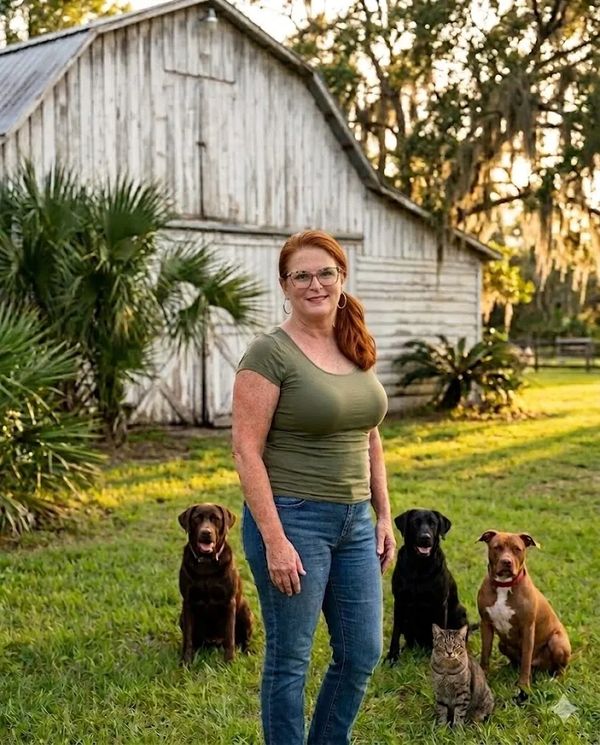
These animals have taught me that a beautifully organized theory will eventually meet an animal who has not read it. They have taught me that nutrition matters deeply without being responsible for everything, that good veterinary medicine is a gift, that environment matters more than people sometimes realize, and that paying attention is one of the most useful things we can do for an animal.
They have also taught me that discernment requires a sense of humor. Sometimes the dog eats dirt because there is a medical reason worth investigating, and sometimes another dog eats dirt because dirt was available and apparently today’s standards are low. Sometimes the cat changes sleeping spots because something in her world shifted, and sometimes the new cardboard box is simply superior to the expensive bed.
Our job is not to turn every quirk into a problem.
It is to know our animals well enough to notice when a quirk starts telling a different story.

Healthy Tails is not here to make you afraid of your pantry or guilty about the way you currently feed your animal. I am not interested in telling you that kibble is evil, that raw feeding makes you morally superior, that every veterinarian is wrong, or that every problem can be fixed with something green, powdered, and expensive.
I believe God gave us these animals to care for, and I believe He also gave us brains, curiosity, science, veterinarians, food, plants, experience, common sense, and enough humility to admit when we do not know everything yet. I want to use all of it.
That is Healthy Tails to me: holistic, practical, nerdy, occasionally ridiculous, serious about the animals, and not terribly interested in making Pet Parents feel like they have failed because dinner came out of a bag.