Signed in as:
filler@godaddy.com
Cooking for a cat sounds simple right up until you realize you are feeding an obligate carnivore with very specific nutritional requirements, a strong preference for things being exactly the way they were yesterday, and the ability to reject dinner because you changed the bowl.
Welcome to cats.
Fresh food can be a wonderful option, but “fresh” does not automatically mean “complete,” and it definitely does not mean every cat should eat the same recipe.
Two cats can be the same age, roughly the same size, and live in the same house while being completely different little creatures.
One runs warm and sprawls across the cool tile like they pay the electric bill.
Another is tucked into a blanket burrito before the temperature drops below seventy-five.
One would happily eat anything placed within six feet of the kitchen.
The other requires a formal tasting committee.
That individuality is where Constitution Kitchen begins.
I use my education in holistic pet nutrition and wellness, along with Traditional Chinese Medicine / TCVM principles and food energetics, to create cooked fresh-food recipes around the individual cat rather than pulling a generic homemade recipe off the internet and hoping the tiny predator approves.
We start with the cat.
Then we build the bowl.
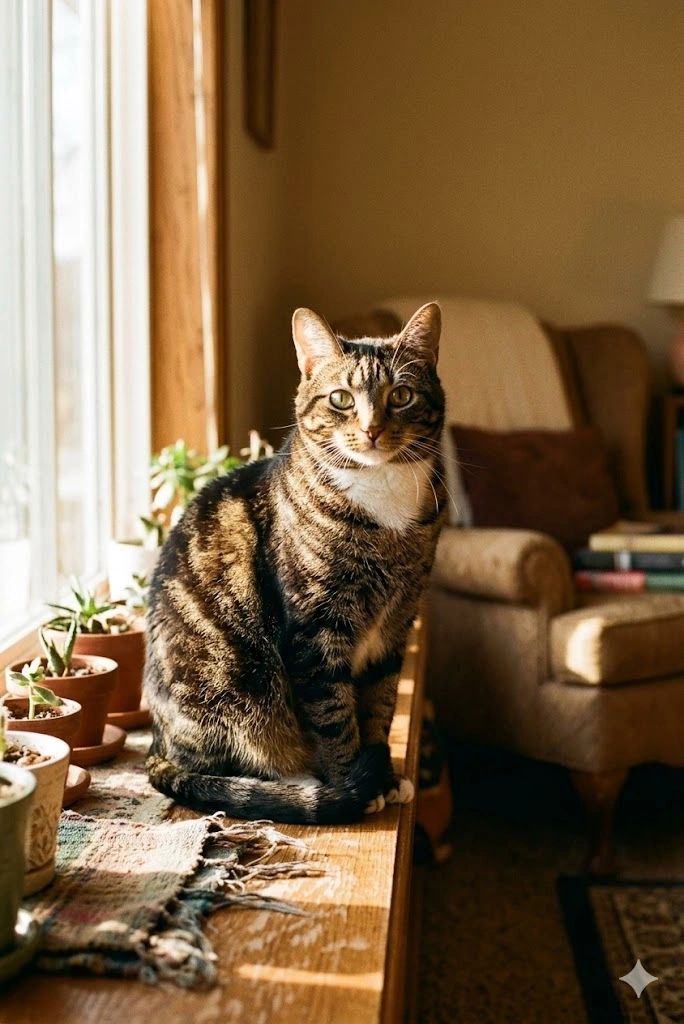

If the idea of cooking for your cat has crossed your mind and then immediately been followed by:
“Absolutely not. I will somehow accidentally kill her.”
I understand.
Cats have very specific nutritional requirements. Protein matters. Fat matters. Moisture matters. Taurine matters. Calcium and phosphorus matter. Vitamins and minerals matter. And simply putting meat in a bowl does not magically turn it into a complete feline diet.
That is the part I take seriously.
The cooking itself is usually much less dramatic.
You do not need to become a feline chef with a copper pan collection and a television contract. Most of this can be prepared in batches, portioned, and stored so you are not cooking a separate five-star dinner every night while your cat screams that starvation has clearly begun.
The hard part is the formulation.
What goes in.
How much goes in.
What has to be added.
And how we make the plan fit the particular cat waiting beside the refrigerator.
That is my job.
You cook.
I do the nerdy math.
Your cat provides unsolicited performance reviews.

For Cats Without a Diagnosed Medical Condition Requiring Special Dietary Management
The House Recipe is for the generally healthy cat whose Pet Parent wants cooked fresh-food recipes made specifically for that cat.
We start with the constitutional picture and combine it with the practical pieces that matter: current weight, activity, age, feeding history, preferences, food acceptance, lifestyle, and the realities of living with a creature who may decide that chicken was wonderful on Monday and morally unacceptable by Thursday.
From there, I create the fresh-food plan around the cat in front of us.
This is not a generic recipe with your cat’s name typed at the top.
It is individualized feline nutrition built with both the cat’s nutritional biology and constitutional framework in mind.
What You Get
The House Recipe is not the “lesser” version of Constitution Kitchen.
It is the version designed for the cat who does not have a diagnosed medical condition changing the way the diet needs to be formulated.
If that describes your cat, this is probably your door.
For Cats With Diagnosed Medical Conditions, Prescription Diets, Abnormal Labs, or Other Veterinary Considerations
The Special Order is where the medical history becomes part of the nutrition homework.
If your cat has a diagnosed medical condition, currently eats a prescription or veterinary diet, takes medication that may affect nutrition, has abnormal bloodwork, or has another veterinary consideration that could change the way a fresh-food plan needs to be built, I need that information before I formulate.
Cats are not a species I am willing to guess on.
A diagnosed condition may change the nutritional considerations around things like phosphorus, protein, fat, sodium, calories, fiber, minerals, or other parts of the formulation.
A prescription diet may be serving a very specific medical purpose.
Medication can matter.
Lab work can matter.
And I want the whole known picture on the table before I start changing what goes into the bowl.
Why I Need Your Veterinary Records
For Special Order, current veterinary records and recent bloodwork are required.
I review the diagnosis, current prescription diet if there is one, medications, recent laboratory results, and the veterinary recommendations you provide so I understand the medical context already established for your cat.
I am not independently diagnosing your cat from those records, and I am not replacing your veterinarian’s interpretation of the bloodwork.
I am using the medical information that already exists so I can build the fresh-food plan with those known considerations in mind rather than pretending they do not exist.
Because that would not be holistic.
That would just be ignoring important information.
If I do not have enough current information to understand the medical picture, I will not guess my way through the recipes.
I would rather tell you we need more information first.
What You Get
The goal is not for me to take over your cat’s medical care.
The goal is for me to know enough about the medical care already happening that I do not build the food plan as though it exists in a vacuum.

Food is one of the first things people look at when a cat is itchy, licking excessively, dealing with recurring skin trouble, or generally acting like something is making them uncomfortable.
And yes, food can absolutely be part of the picture.
But itching is still a symptom.
It is not a diagnosis.
Food may matter.
Environmental exposures may matter.
Parasites may matter.
Infection may matter.
Allergies may matter.
Grooming products, litter, household products, medications, or something else entirely may matter.
So Constitution Kitchen can help make the food side thoughtful, complete, and individualized.
What it cannot do is prove that food caused the itching or guarantee that changing the food will make the itching disappear.
If the cat needs veterinary evaluation, that remains part of the picture.
Because sometimes the most holistic thing we can do is stop trying to make the bowl answer a question that belongs somewhere else.
Sometimes the bowl really is the main question.
And sometimes you make the food more thoughtful, give the cat time to settle into the new routine, pay attention, and eventually realize:
Okay. There is more going on here.
That is where the Constitutional Analysis goes deeper.
Constitution Kitchen is primarily asking:
What should I feed this cat, based on the individual animal, feline nutritional needs, and their TCVM constitutional picture?
The Constitutional Analysis steps back and asks:
What else in this cat’s everyday world deserves a closer look?
That can include water source, litter and litter-box setup, household cleaners, laundry products, fragrances, candles, plug-ins, grooming products, flea and tick products, environment, seasonal exposures, stress, sleep, routine, movement, and the other things your cat encounters every day.
Cats are particularly good at living in tiny details.
The litter changed.
The furniture moved.
The neighbor got a dog.
Someone bought a new air freshener.
And apparently civilization has collapsed.
A truly holistic picture leaves room for those details too.

This is the part that makes feline nutrition uniquely humbling.
You can formulate the most beautiful recipe on Earth.
If your cat will not eat it, we have accomplished exactly nothing.
Food acceptance matters.
Texture matters.
Smell matters.
Temperature matters.
Familiarity matters.
And with cats, abrupt changes or simply allowing them to go without eating because they are being “stubborn” is not a strategy I support.
We work with the cat we have.
Sometimes that means gradual introduction.
Sometimes it means modifying texture.
Sometimes it means discovering that your cat has apparently appointed herself Executive Vice President of Mouthfeel.
Fine.
She can have the title.
The goal is a nutritionally thoughtful plan the cat will actually eat.
There is no prize for feeding your cat in the most complicated way possible.
And there is no moral failure if you need to take this slowly.
We are caring for living creatures who have been entrusted to us, and thoughtful care does not mean chasing perfection every time somebody on the internet announces a new rule.
It means paying attention.
Learning.
Making the best decisions we can with the information in front of us.
And adjusting when the cat tells us something has changed.
Sometimes beautifully.
Sometimes by staring at dinner and walking away with theatrical disgust.
Both count as feedback.
You do not need to figure that out perfectly before you contact me.
If there is a diagnosis, prescription diet, medication, abnormal lab result, or another medical concern anywhere in the picture, tell me.
That is what the intake is for.
If House Recipe fits, great.
If Special Order is the more appropriate route, we go there.
And if the medical picture is complicated enough that I believe your veterinarian or a board-certified veterinary nutritionist needs to be more directly involved, I will tell you.
I am not interested in cramming every cat into a service just because the button exists.
Cats would never tolerate that kind of nonsense anyway.